Last updated: 24 September 2026
Starlink has changed one of the basic requirements for getting broadband internet in Zambia: users no longer necessarily need fibre infrastructure or a nearby mobile tower.
That makes satellite internet particularly interesting for rural communities, schools, health facilities, farms, tourism businesses and government offices located far from reliable terrestrial broadband.
But availability does not necessarily mean affordability or long-term sustainability.
This MicLinks Radar technology assessment examines a more important question: can Starlink provide a practical, affordable and sustainable broadband solution for underserved parts of Zambia?
HOW STARLINK WORKS
Starlink uses thousands of satellites operating in low-Earth orbit.
Unlike traditional satellite internet systems that commonly rely on satellites much farther from Earth, Starlink's lower orbit reduces the distance signals must travel and helps lower latency.
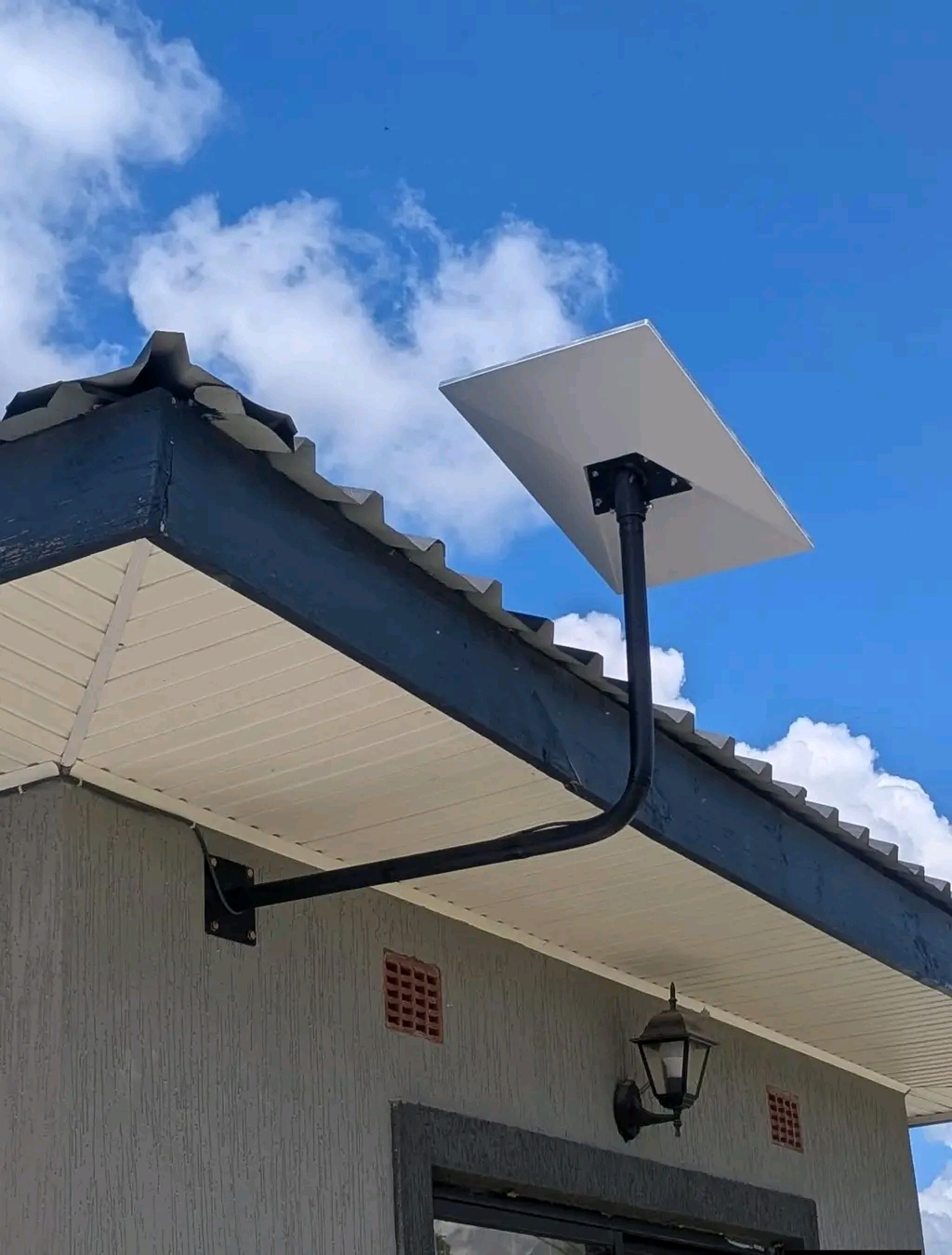
A Starlink terminal communicates with satellites passing overhead, allowing broadband to reach locations without fibre running to the property or a nearby mobile base station.
For Zambia, where some rural communities are separated by considerable distances, that creates an important alternative to terrestrial infrastructure.
STARLINK IS ALREADY BEING DEPLOYED IN ZAMBIA
Zambia is already using Starlink beyond individual households.
According to Zambia's 2026 Budget Speech, 525 Starlink kits had been deployed since 2023 across 230 government departments, all 156 constituency offices, 109 post offices, 23 youth resource centres and several other public institutions.
Government also announced plans to provide satellite connectivity to 400 health facilities under the Solar for Health initiative.
Another three-year programme announced in September 2026 is initially targeting 70 public schools for Starlink connectivity.
Off-grid schools are expected to receive solar systems, highlighting an important issue: Starlink can overcome the absence of terrestrial internet infrastructure, but it cannot overcome the absence of electricity on its own.
WHAT DOES STARLINK COST IN ZAMBIA?
Cost is one of the most important parts of this assessment.
Current Zambia pricing shows Residential Lite at around K800 per month and Residential at around K1,160 per month.
Hardware prices vary by equipment, supplier and promotion. Current market listings place the Starlink Mini at roughly K5,250–K6,499, while Standard hardware can cost roughly K8,999–K10,290.
These prices can change and should therefore be recorded again at the time of any field experiment.
The long-term cost is more revealing than the monthly subscription alone.
Using a K8,999 Standard kit and a K1,160 monthly Residential subscription, and excluding electricity, installation and future price changes:
Year 1: approximately K22,919
3 years: approximately K50,759
5 years: approximately K78,599
Using the same hardware with an K800 monthly Lite subscription:
Year 1: approximately K18,599
3 years: approximately K37,799
5 years: approximately K56,999
The real total cost can be higher once mounting, electricity, networking equipment, maintenance and potentially solar power and batteries are included.
STARLINK VS 5G
The economics change significantly where terrestrial broadband is already available.
Airtel Zambia currently advertises home 5G packages around K700 per month for up to 20 Mbps and K1,000 for up to 50 Mbps, subject to network conditions and fair-use policies.
MTN Zambia also lists home packages around K700 for 20 Mbps, K850 for 30 Mbps and K1,000 for 50 Mbps.
Starlink Lite therefore isn't dramatically more expensive per month than some Zambian home broadband packages.
The major difference is the initial hardware investment.
Where reliable 4G, 5G or fibre already exists, terrestrial broadband may therefore provide a stronger economic case.
But move the same comparison to a remote location without reliable mobile broadband and the equation changes.
A K5,000–K10,000 satellite terminal may become considerably more attractive than waiting for kilometres of fibre or a new mobile base station to be constructed.
POWER IS ANOTHER COST
Internet equipment needs electricity.
Starlink's specifications indicate that the Mini typically consumes approximately 20–40 watts, while the Standard terminal typically consumes around 75–100 watts.
If operated continuously, a Standard terminal consuming 75–100 watts would use approximately 54–72 kWh per month.
A Mini operating at 20–40 watts would consume roughly 14.4–28.8 kWh per month.
That difference could become extremely important in an off-grid deployment.
A remote school may require solar panels, batteries and power-management equipment in addition to the Starlink terminal itself.
This raises an interesting research question: could the lower-power Starlink Mini provide better overall value for off-grid Zambian communities even if another terminal provides greater network performance?
ADVANTAGES OF STARLINK IN ZAMBIA
Starlink's strongest advantage is coverage.
A terminal can potentially provide broadband to a remote school, farm, lodge, clinic, mine or government facility without waiting for local fibre infrastructure.
Deployment can also be considerably faster than constructing new terrestrial infrastructure.
Satellite internet could therefore be useful for remote operations, temporary sites, emergency communications and locations where low population density makes conventional network expansion expensive.
Starlink can also be combined with solar power, potentially allowing broadband infrastructure to operate beyond the electricity grid.
Research conducted in previously unconnected rural Zambian communities has already shown another interesting effect.
Researchers observed people travelling significant distances to access newly available internet hotspots. Some participants also purchased, or planned to purchase, smartphones to take advantage of the connectivity.
Connectivity can therefore influence technology adoption beyond the internet connection itself.
THE DISADVANTAGES
Starlink is not without significant limitations.
The equipment requires an upfront investment.
Reliable electricity is still necessary.
The terminal requires a suitable installation position and sufficiently clear view of the sky.
Satellite capacity is also shared.
As more subscribers use Starlink within the same geographic area, congestion can affect performance. Starlink's Residential Lite service specifically receives lower network priority during periods of congestion.
This raises questions about how well satellite broadband scales if adoption increases dramatically.
Zambia also remains dependent on infrastructure operated by an external private satellite company.
For these reasons, Starlink should not be viewed as a replacement for Zambia's fibre and mobile networks.
Fibre remains essential for high-capacity backbone connectivity, data centres and dense commercial environments.
Mobile networks provide connectivity directly to devices people already own.
Satellite broadband fills a different infrastructure gap.
THE MICLINKS RADAR EXPERIMENT
Published information can only answer part of the question.
MicLinks Radar proposes conducting an independent field experiment comparing:
Starlink Mini
Starlink Standard
4G/5G mobile broadband
Fibre, where available
Testing would be conducted in both urban and rural environments.
Instead of performing a single internet speed test, measurements would be collected repeatedly over several weeks.
The experiment would measure:
• Download speed
• Upload speed
• Latency
• Packet loss
• Network availability
• Peak-hour performance
• Power consumption
• Weather-related variation
• Installation requirements
• Total cost
• Performance with multiple simultaneous users
One experiment would progressively connect 1, 5, 10, 20 and potentially more devices to determine how performance changes as network load increases.
That could help answer an important practical question: can one Starlink terminal realistically support a school, small business or community hotspot?
MEASURING THE REAL COST
The research would calculate Total Cost of Ownership rather than simply comparing monthly subscription prices.
Total Cost of Ownership =
Hardware + Installation + Subscription + Electricity + Supporting Equipment + Maintenance
The study would then calculate:
• Cost per connected user
• Cost per Mbps
• Five-year total cost
• Energy consumption
• Performance per additional user
These measurements could provide a more meaningful comparison between satellite and terrestrial broadband.
There is also a regulatory consideration.
ZICTA has stated that organisations reselling satellite internet services to retail customers require the appropriate telecommunications licence.
Testing multiple users on a research network is therefore different from commercially selling Starlink connectivity to households.
WHAT ABOUT STARLINK DIRECT TO CELL?
The next development could reduce dependence on dedicated satellite terminals.
MTN Zambia and Starlink announced successful Direct to Cell field testing in Zambia in 2026.
Direct to Cell is designed to allow compatible LTE phones to communicate with specially equipped Starlink satellites.
MTN reported completing a data session and mobile-money transaction during testing.
Commercial availability in Zambia remains subject to regulatory approval.
If eventually deployed, Direct to Cell could help fill mobile coverage gaps rather than replace terrestrial mobile towers entirely.
OUR RESEARCH HYPOTHESIS
MicLinks Radar's initial hypothesis is that Starlink will provide its strongest technical and economic advantage in locations where terrestrial broadband infrastructure is weak or unavailable.
Where reliable and competitively priced fibre or 5G already exists, Starlink's hardware cost and satellite capacity limitations may make terrestrial broadband more attractive.
As distance from reliable terrestrial infrastructure increases, however, the economics could increasingly favour satellite connectivity.
That remains a hypothesis.
The next step is to test it with real Zambian network, power and cost data.
MicLinks Radar — Discover. Understand. Build.