Last updated: 20 September 2026 Cameras are one of the most important sensors used by modern robots. But what happens when a robot cannot see? Researchers have demonstrated a tiny flying robot that can navigate using touch instead of relying entirely on cameras or other conventional sensors. The idea takes inspiration from animals such as rats and moles, which can use their whiskers to understand their surroundings. The research was published in Nature Communications on 18 September 2026. A DRONE THAT CAN FEEL The researchers developed a lightweight tactile sensing system that weighs only 3.2 grams. It uses whisker-like sensors mounted on a small drone. When a whisker touches an object, sensors at its base measure information about that contact. The drone can then estimate where the obstacle is and adjust its movement. Instead of only seeing the environment, the robot can physically feel it. WHY WOULD A DRONE NEED WHISKERS? Cameras work extremely well when there is enough light and the environment is clearly visible. But there are situations where vision becomes unreliable. Examples include: Dark buildings Smoke-filled environments Caves Confined spaces Transparent objects Reflective surfaces Search-and-rescue environments In these situations, a small robot that can physically sense nearby surfaces could continue navigating even when its cameras struggle. IT WORKS IN COMPLETE DARKNESS One of the most interesting demonstrations is the drone operating in complete darkness. The researchers showed that the robot could use tactile information to follow surfaces, avoid obstacles and explore confined environments. It could also build information about its surroundings through physical contact. This gives the drone another way of understanding the world when vision is unavailable. THE COMPUTING HARDWARE IS SURPRISINGLY SMALL The system does not require a powerful computer or cloud AI service. The researchers ran the entire tactile perception and navigation system onboard an STM32F405 microcontroller. The microcontroller has only 192 KB of RAM. According to the research paper, the algorithms themselves used about 34 KB. That is particularly interesting for affordable robotics. It demonstrates that useful autonomous behaviour does not always require a large GPU or expensive computer. HOW DOES IT KNOW HOW FAR IT TOUCHED SOMETHING? The robotic whiskers use MEMS barometers at their bases. Normally, barometers are associated with measuring atmospheric pressure. In this system, changes produced when a whisker bends can be measured and converted into information about physical contact. The researchers developed a processing system that estimates contact depth with millimetre-level accuracy. The information is then combined with the drone's movement model to help it understand where nearby surfaces are located. WHY NOT JUST USE LIDAR? LiDAR, cameras and distance sensors remain extremely useful. The researchers are not suggesting that robotic whiskers should replace them everywhere. Instead, touch can provide another sensing method when other sensors become unreliable. This idea is known as sensor fusion. A future robot could potentially combine: Cameras for vision LiDAR for distance IMUs for movement GPS for outdoor positioning Microphones for sound Tactile sensors for physical contact Instead of depending on one sensor, the robot combines several sources of information. THIS COULD MATTER FOR SEARCH AND RESCUE Imagine a damaged building after a disaster. The environment may contain dust, darkness, smoke and narrow spaces that are dangerous for people to enter. A very small drone could potentially explore those spaces. If its camera becomes unreliable, tactile sensors could help it continue moving along walls and around obstacles. Other possible applications include industrial inspection, underground exploration and environments where GPS is unavailable. ROBOTS ARE STARTING TO USE MORE THAN VISION This research is part of a wider development in robotics. AI has made computer vision extremely powerful, but humans do not understand the physical world through vision alone. We also use touch. Touch tells us whether an object is slipping, how strongly we are holding something and when we have made contact with a surface. Researchers are now trying to give robots similar information. Recent robotics research has also explored tactile sensors for robotic hands and arms. That could eventually allow robots to manipulate delicate objects more reliably. A USEFUL LESSON FOR DIY ROBOTICS There is another interesting lesson here. Advanced robotics does not always require extremely powerful hardware. The tactile navigation system runs on a small microcontroller. For makers using Arduino, ESP32, STM32 or Raspberry Pi hardware, this demonstrates an important principle: Use the right sensor and algorithm for the problem instead of relying only on more computing power. Sometimes a simple sensor can give a robot information that would otherwise require much more complicated processing. LIMITATIONS Robotic whiskers are not a replacement for normal navigation systems. Physical contact can disturb a flying robot. Sensors can also experience noise and drift. The researchers therefore had to develop algorithms that compensate for these problems while keeping the drone stable. The system has been demonstrated experimentally, but turning this approach into widely deployed robots will require more development. RADAR STATUS — 20 SEPTEMBER 2026 CONFIRMED: Researchers demonstrated whisker-based tactile navigation on a tiny flying robot. CONFIRMED: The tactile sensor system weighs approximately 3.2 grams. CONFIRMED: The drone demonstrated autonomous navigation and surface following in complete darkness. CONFIRMED: Processing runs onboard an STM32F405 microcontroller with 192 KB of RAM. INTERESTING: The algorithms use only a small fraction of that available memory. WATCH: Tactile sensing could become increasingly important as robots move from controlled laboratories into difficult real-world environments. WHAT HAPPENS NEXT? Computer vision has transformed robotics. Touch could become another important part of that transformation. The most capable future robots may not depend on a single way of understanding their surroundings. They may see, hear, measure distance and feel physical contact at the same time. For tiny robots operating in places humans cannot easily reach, even something as simple as a whisker could make a major difference. That is a technology signal worth tracking. MicLinks Radar — Discover. Understand. Build.
Robotics & DIY · Insight
Tiny Drones Are Learning to Navigate by Touch Instead of Sight
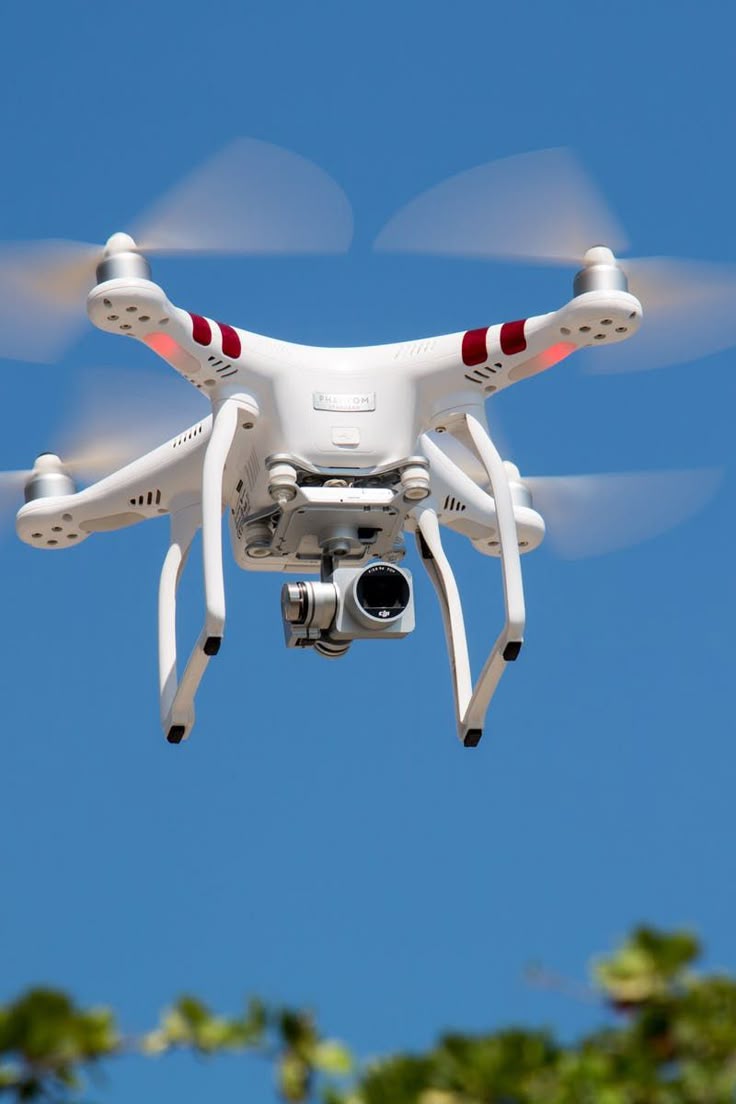
Researchers have developed a tiny drone that uses lightweight robotic whiskers to detect obstacles and navigate through its surroundings by touch. The system can operate in complete darkness and runs entirely onboard a small microcontroller, opening interesting possibilities for search-and-rescue, inspection and exploration.
Original sourceNature Communications ↗